About Newman
Newman and Escrivá: Two Saints, Two Universities
 October 4, 2026
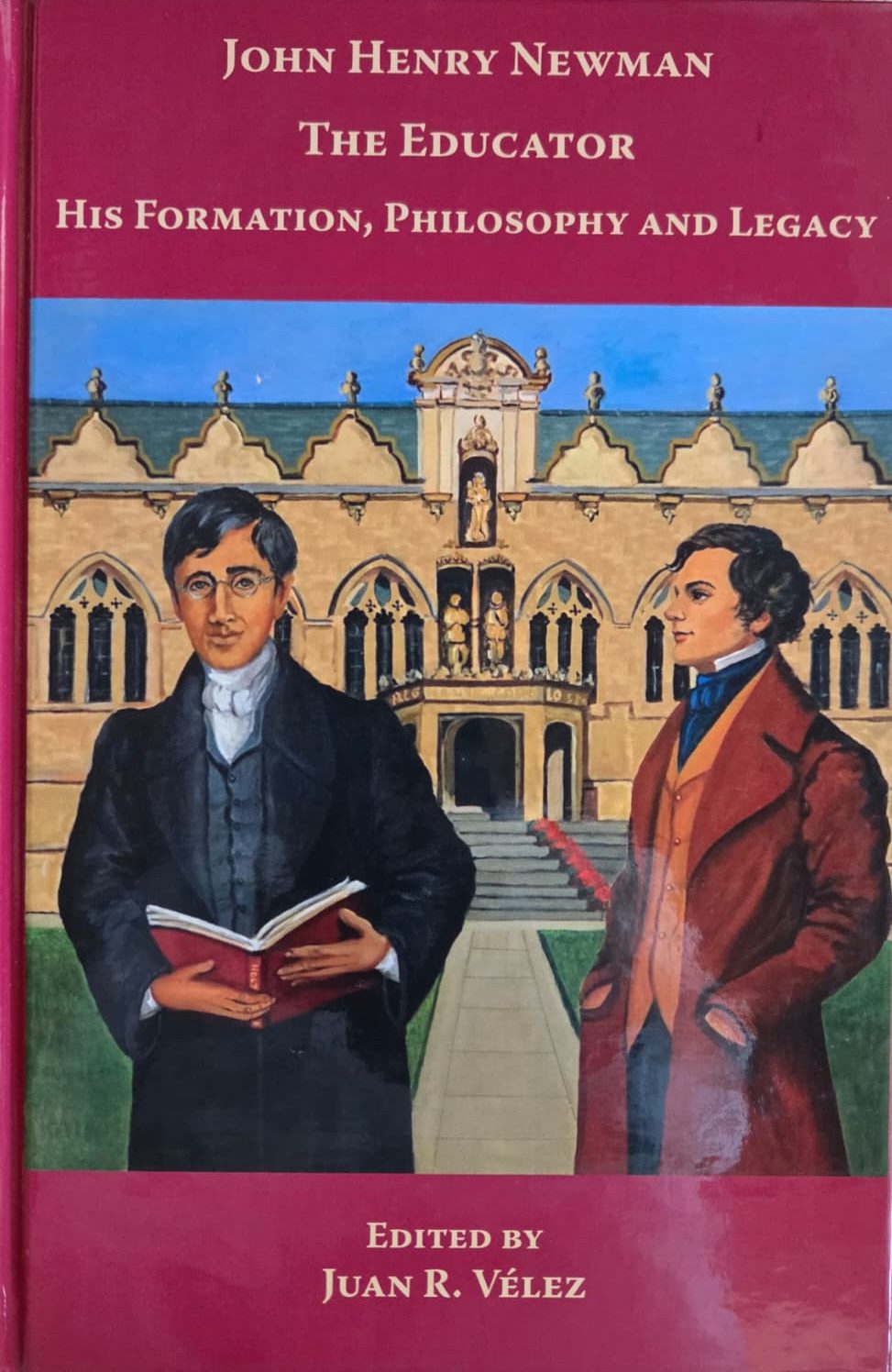
Newman and Escrivá: Two Saints, Two Universities
This week the calendar sets two saints side by side. On October 6 we recall the canonization of St. Josemaría Escrivá by Pope John Paul II in 2002. Three days later, on October 9, we keep the feast of St. John Henry Newman. It was on that rainy night in 1845, at Littlemore, that Newman knelt before Blessed Dominic Barberi and asked to be received into the Catholic Church. And on October 17 the University of Navarra, founded by Escrivá, marks seventy-four years since its first students gathered in Pamplona.
At first glance the two men could hardly be more different. Newman was an Oxford don and a convert, who came to Rome by way of Evangelical Calvinism and Anglicanism. He was a scholar who weighed every word. Escrivá was born into a devout Catholic family in Aragon, and he was above all a preacher, a confessor and a guide of souls. One lived in Victorian England; the other in Spain and Rome during the most violent century Europe has known.
Yet both were pastors and educators, and both met the dangers of their times by educating the mind and the spirit. Both were also founders: Newman of the Birmingham Oratory and the Catholic University of Ireland, Escrivá of Opus Dei and the University of Navarra.
The danger they both faced was the separation of faith from reason. In Fides et Ratio, St. John Paul II traced how the healthy distinction between philosophy and theology slid, from the late Middle Ages on, into “a fateful separation.” Reason went its own way, and some believers, frightened, stopped trusting reason at all.
Newman met this separation at Oxford. As a young tutor at Oriel he saw undergraduates who knew little of their faith and practiced it out of habit. Escrivá met it a century later in Madrid, where religious ignorance turned into open hatred of the Church and finally into the bloodshed of the Civil War.
Neither man responded by building walls. Both responded by building places where the whole truth could be studied together.
Dublin and Pamplona
In 1851 Archbishop Paul Cullen asked Newman to found a Catholic University in Ireland. Newman was only just establishing the Oratory in Birmingham and facing a libel trial. He said yes anyway. He wrote the lectures we now know as The Idea of a University, recruited professors, spent his own money on buildings and on a University Church, and crossed the Irish Sea fifty-six times. The university opened in November 1854 with twenty students.
A century later, on October 17, 1952, a small college opened in Pamplona with a Mass of the Holy Spirit and forty-one students. Escrivá had sent three young professors to start it: a chemist, a canon lawyer and a civil lawyer. Navarra was recognized as a university in 1962. Since then, people inspired by Escrivá have started universities in Mexico, Colombia, Peru, the Philippines, Kenya, Nigeria and many other countries.
As a physician and a graduate of Navarra, I am glad to note that both founders started a medical school almost at once. Newman opened one in Dublin in 1855, because a large Catholic city had very few Catholic doctors. Escrivá encouraged a faculty of medicine at Navarra two years after its founding, and he told its doctors to see Christ in their patients. For neither man was a university an ivory tower. Learning was meant to serve the sick and the poor.
The circle and the unity
Newman’s great image for the university is a circle of knowledge. All the branches of learning, he wrote, “run into each other, and complete each other.” Take theology out of the circle and the gap does not stay empty. Other sciences rush in to answer questions they were never made to answer.
Escrivá, without drawing on Newman, also affirmed the unity of human knowledge as a reflection of God’s own wisdom, and he spoke of “unity of life.” On October 8, 1967, preaching on the Navarra campus, he warned students against living a double life: a spiritual life on one side, and work, study and family on the other, as though God had nothing to do with them. The Christian vocation, he said, is to make “heroic verse out of the prose of each day.” In The Way he put it even more boldly: for a modern apostle, an hour of study is an hour of prayer.
Newman speaks of the mind, Escrivá of the soul, but the conviction is the same. Truth is one because God is one. A student who prays on Sunday and thinks on Monday as if God did not exist is divided. So is a university that keeps its chapel and its laboratories in different worlds. In Dublin, Newman set up small collegiate houses within the university, each with its chapel and chaplain, and he had a university church built. Likewise, at Navarra, every school has a chapel and a chaplain. The faculty and students are encouraged to lead a Christian life of prayer and study.
Heart speaks to heart
The two founders also agreed that young people learn most from living with other persons. Newman called it “personal influence.” In Dublin he placed young resident tutors in those houses, so that teaching could grow into friendship. In the last discourse of the Idea he argues that a university is Christian not chiefly because it teaches theology, but because of the character of the people who teach there. It is no accident that he chose as his cardinal’s motto Cor ad cor loquitur, “heart speaks to heart.”
Escrivá called the same thing “the apostolate of friendship.” He spent hours with students in Madrid, visiting the sick poor with them and talking with them about their studies and their souls. Later he opened residences for university students in many cities, as homes where character could grow alongside learning.
Both men believed that virtue opens the mind to truth, and that friendship with good people is one of the surest roads to both.
For this week
Last year Pope Leo XIV named Newman co-patron of the Church’s educational mission, together with St. Thomas Aquinas, and a few days later declared him a Doctor of the Church. On Friday, October 9, his feast day, we will look more closely at those honors. For now, this week of feasts suggests three acts. Ask the Holy Spirit to help you grow in wisdom and in understanding of the unity of faith and reason. Try to learn each day from your teachers and classmates. And thank God for your teachers, and pray for them by name.
St. John Henry Newman and St. Josemaría Escrivá, teachers of the whole truth, pray for us.


